


Table of Contents

Cyprus has become a growing destination for technology companies, attracting startups, international businesses, and established firms across sectors such as fintech, software, gaming, and cybersecurity.
However, this growth has created a new challenge: finding enough skilled professionals to support continued expansion. Many employers are finding it difficult to hire experienced candidates, especially for roles that require advanced expertise in areas such as cloud computing, artificial intelligence, and cybersecurity.
In this guide, we explore the top 10 tech skills employers are prioritizing in Cyprus in 2026 and why demand is increasing. We’ll also cover what companies need to know when building their technology teams.
The list reflects current hiring demand in Cyprus, based on recruiter insights, 2026 salary trends, and digital skills reports.
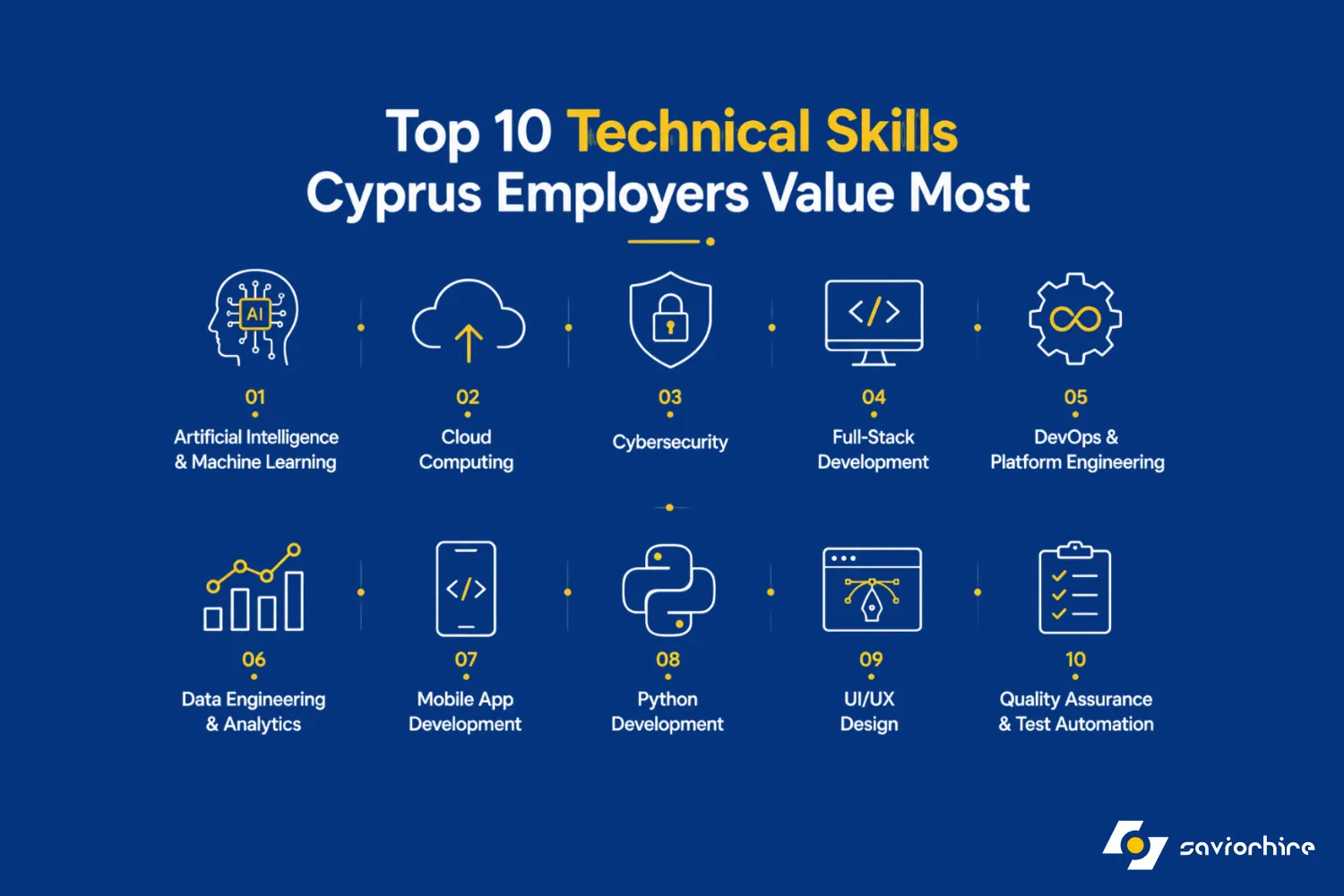
AI has become a priority skill across Cyprus, with demand coming from fintech, iGaming, banking, and SaaS companies. Employers increasingly need engineers who can build and deploy AI solutions, not just experiment with models.
Commonly useful skills include:
Framework choice matters less than most job posts suggest. Employers care far more about whether you can take a model from a notebook into a system running reliably in production.
As Cyprus companies continue moving more workloads to the cloud, demand for cloud engineers remains strong. These skills are especially valuable in SaaS, fintech, and international technology companies.
Typical technologies and tools include:
Certifications help get a foot in the door, but what actually matters is whether you can design and run infrastructure that scales reliably under real traffic.
Half of Cyprus's businesses have already faced a cyberattack, and experts point to a severe, ongoing shortage of security talent. Even backend engineers with basic security knowledge are hard to come by. You'll find these roles clustered in fintech and forex brokerages, banking, iGaming, and payment institutions, where the stakes of getting security wrong are highest.
Commonly useful skills include:
In regulated sectors, employers want people who think like an attacker and can explain risk clearly to non-technical stakeholders. Running a scanning tool and handing over a report isn't enough anymore.
Full-stack developers remain in steady demand across Cyprus, particularly among SaaS companies, fintech platforms, and iGaming businesses. Employers value engineers who can build, maintain, and improve products across both frontend and backend systems.
Typical technologies and tools include:
A long list of frameworks on a CV doesn't carry much weight anymore. Employers want proof you can build reliable software, debug real issues, and explain the tradeoffs behind your decisions.
As Cyprus companies scale their digital products, keeping systems reliable becomes just as important as building new features. DevOps engineers are especially valuable for SaaS platforms, fintech companies, forex firms, and gaming businesses where downtime can directly affect revenue and customer experience.
Commonly useful skills include:
Tool familiarity is table stakes at this point. What actually separates strong candidates is the ability to automate away operational load so teams aren't firefighting all day.
With companies collecting more customer, transaction, and operational data, data engineering has become one of the most difficult technical areas to hire for in Cyprus.
Employers need professionals who can build reliable data pipelines, maintain data quality, and turn large datasets into useful business insights.
Typical technologies and tools include:
Writing a query is the easy part. Employers want engineers they can trust with the accuracy and governance of data that the business actually runs on.
Mobile experience has become a key differentiator for Cyprus companies building fintech, iGaming, and consumer-facing digital products. Developers who can create fast, reliable apps across platforms are valuable to businesses where user experience directly affects engagement and retention.
Commonly useful skills include:
Performance and polish under real usage conditions matter most here. Employers want developers who understand how small UX friction quietly erodes conversion and retention.
Python continues to be one of the most widely requested programming skills in Cyprus because of its role in AI, data engineering, automation, and backend development. It is particularly common across fintech companies, technology startups, and businesses improving internal processes through automation.
Typical technologies and tools include:
Language familiarity picked up from an online course only goes so far. Employers want candidates who can point to real projects and code that's actually running in production.
As Cypriot companies compete for digital customers, product design has become closely linked to business performance. Fintech, SaaS, and iGaming companies increasingly need designers who can create intuitive experiences that improve user engagement and support product growth.
Commonly useful skills include:
A polished portfolio helps you get noticed, but what employers really want is evidence that your design decisions move actual product metrics.
Software quality remains a priority across Cyprus, especially in industries where reliability and compliance are critical. While manual testing is still useful, companies are increasingly hiring QA professionals who can build automated testing processes.
Commonly useful skills include:
Manual test scripts still have a place, but employers increasingly want QA engineers who can build and maintain automated processes end-to-end.
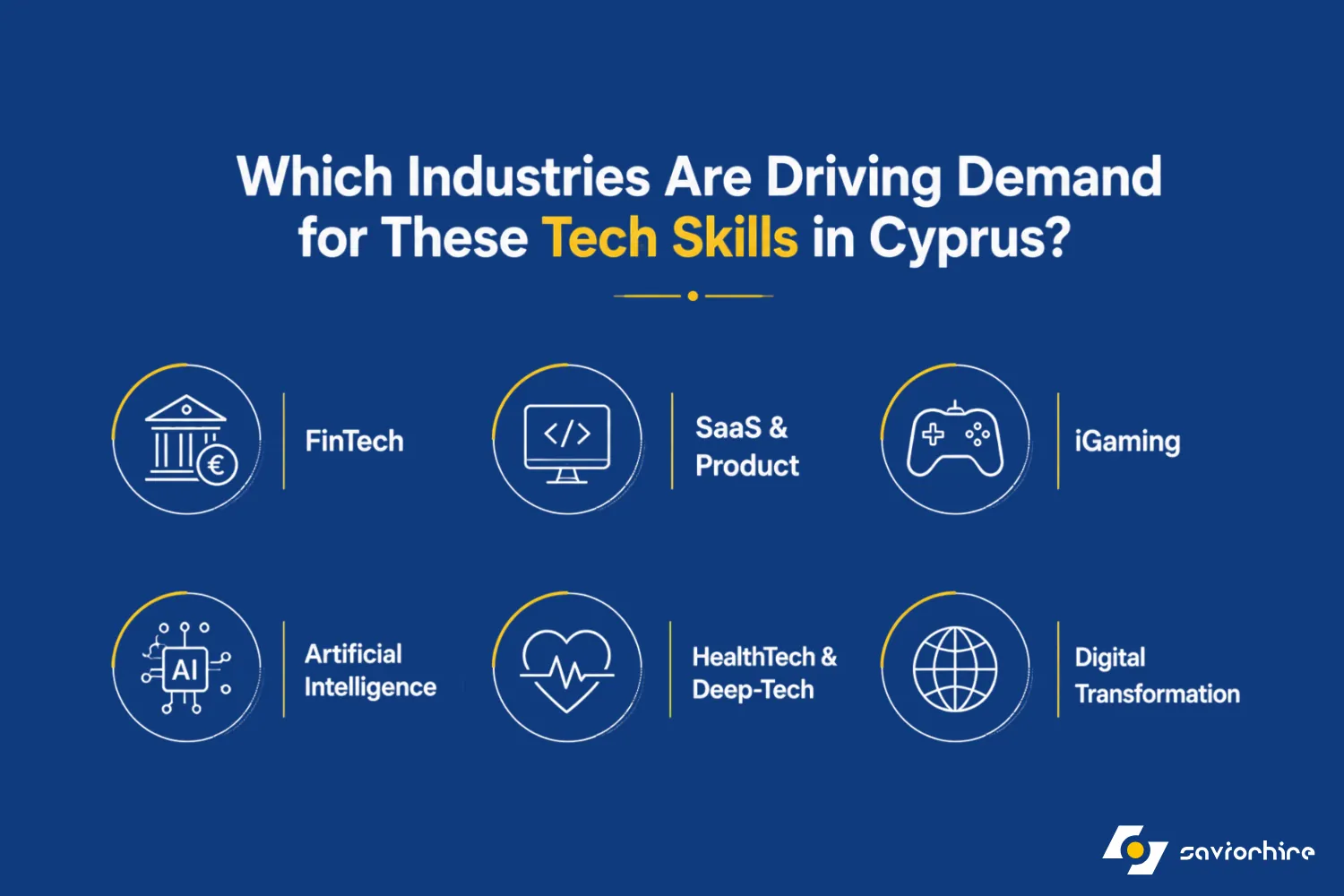
Several factors are increasing the demand for technical skills across Cyprus. The country's IP Box regime, which can reduce the effective tax rate on qualifying intellectual property income, requires companies to demonstrate genuine R&D activity under OECD nexus rules. This encourages businesses to build local development teams rather than relying entirely on external resources.
At the same time, Cyprus is investing in digital transformation through EU Digital Decade targets and national initiatives focused on areas such as cloud adoption, artificial intelligence, and digital services. As more companies expand in sectors like fintech, software, and technology services, the need for skilled professionals continues to grow.
For Cyprus businesses, technical expertise is becoming a key factor in innovation, competitiveness, and long-term growth.
The gap here runs at two speeds. Only 55.75% of the population has at least basic digital skills. This represents an annual increase of 6.2% since 2023, but it remains below the EU average of 60.40%.
At the same time, demand for specialized technology professionals continues to grow. ICT specialists account for 5.4% of employment, above the EU average of 4.8%, showing that companies are actively building technology teams but often compete for a limited pool of experienced candidates.
The talent pipeline remains another challenge. ICT graduates represent only 2.8% of all graduates in Cyprus, compared with the EU average of 4.2%. This gap contributes to the country's high reliance on ICT outsourcing, which accounts for around 84% of the sector.
Industry organizations, including the Cyprus IT Enterprises Association (CITEA), have also highlighted the need to expand the skilled technology workforce and improve diversity within the sector.
Cyprus employers are placing more emphasis on practical skills, portfolios, and real-world experience. Professionals can stay competitive by focusing on:
For career changers and self-taught developers, demonstrable ability can increasingly open opportunities alongside traditional qualifications.
Technical chops open the door, but they rarely close the deal alone. Employers weigh adaptability and problem-solving heavily, often ahead of pure credentials:
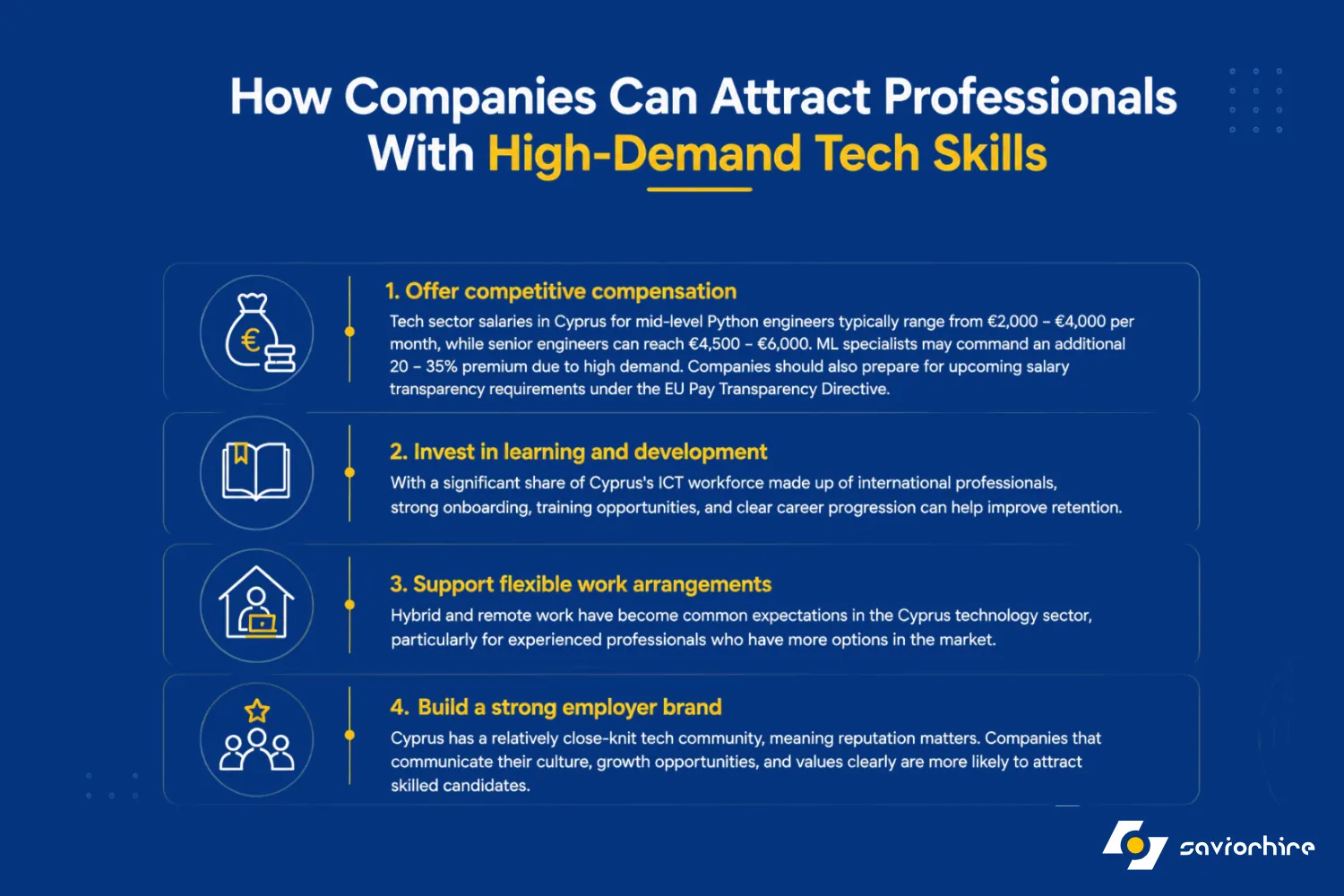
With competition for experienced technical talent increasing, Cyprus companies need more than just an open position to attract strong candidates. Key strategies include:
Cyprus companies are competing for a limited pool of experienced technology professionals. This is especially true for roles in AI, cloud, cybersecurity, and software development. SaviorHire helps businesses navigate this market through specialised tech recruitment focused on the needs of Cyprus employers.
We support Cyprus-based companies across sectors such as fintech, SaaS, iGaming, and digital services. Our team sources qualified candidates, evaluates technical experience, and identifies professionals who match each role's requirements. We help businesses access both local talent and international professionals interested in opportunities in Cyprus.
Whether you are a growing startup, an established technology company, or an international business expanding into Cyprus, SaviorHire helps you build stronger technical teams through a more efficient recruitment process.
Ready to hire? Talk to our team and get matched with vetted tech talent.
What are the most in-demand tech skills in Cyprus?
Are AI skills in demand in Cyprus?
Which industries hire the most tech professionals in Cyprus?
What skills should companies train employees in?
Do employers value certifications or experience more?
What soft skills are important for tech professionals?
How can companies hire professionals with specialised tech skills?

Hamlet Mirzoyan
Tech & iGaming Recruitment Expert, CEO of SaviorHire
Hamlet Mirzoyan
Tech & iGaming Recruitment Expert, CEO of SaviorHire
Hamlet Mirzoyan helps companies in the tech industry build strong and high-performing teams. With over a decade of experience in technical recruitment, he shares insights on hiring trends, talent strategies, and industry updates through the SaviorHire blog.
Need to hire faster?
Let’s talk